Return to Listing
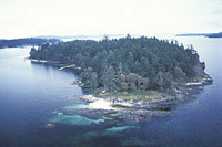
Imagine living in your own marine park in a scaled down lodge, built from rough cut cedar
with a huge stone fireplace surrounded by mossy bluffs and old growth firs. Well, with
almost 10 private acres of undisturbed ecosystems on the sea, this property is actually
its own self-contained natural world. It has brought peace and joy to everyone who has
ever stepped foot on this property. On clear days well into summer the majestic
snow-capped Olympics can be seen towering over the San Juan de Fuca strait. Every room in
the house looks out upon an ever-changing seascape of weather and wildlife. Families of
otters scoot along in the shallows below your breakfast counter. Flotillas of Canada Geese
regularly paddle around the house to feed in the eel grass beds, their downy goslings in
tow. They wing across our windows in long lines, honking so loudly that you have to stop
whatever you’re doing to watch. Along our shore ducks spiral beneath the surface of the
sea to fish, emerging bright eyed with beads of water running off their heads. There are
Red Breasted and Hooded Mergansers, Harlequin ducks, Buffleheads, Goldeneyes, and
Mallards, just to name a few. You grab your binoculars at the sight of one you haven’t
looked up yet in your reference books piled on a table. I am always taken with the
plaintive call of the loon rising from somewhere out in water, hushing the world it seems,
as the gossamer lights of the ferry ply through the evening mists.
Seals sit out front, sort of spy-hopping in the kelp beds, as if contemplating us from day
to day. We have rescued a couple of abandoned and starving seal pups on tiny Chad Island
out in front of us, wrapped them up in a blanket and brought them back to the Island
Wildlife Natural Care Center on Salt Spring, one of only two in British Columbia for
marine mammals. Please excuse this paragraphed list of descriptions but each creature and
experience I think of links to the next, just as our appreciation of this property has
grown over the years.
We know there are giant octopus out there, elusive as they are, because I spotted the
tentacle of one holding the rudder of my sailboat out in front of our house one summer.
And there is always the Great Blue Heron, setting off every day from a nest you can see
just across the inlet to our left. Then the heron flies stoically back each evening,
croaking hoarsely as an antique car, as if on his way home from work. On overcast days we
often get the bonus of bright blasts of low morning sun from the east. Cormorants stand on
floating driftwood like wet cats with their wings held up to dry. They have less
waterproofing oils in their feathers which allows them to dive deeply.
There are times you will walk across the living room to add another log on the fire,
suddenly stopping to stare breathlessly at a magnificent eagle perching on a snag in an
old fir just outside the window. He plunges back into the seascape once he knows he’s been
seen, before we can retrieve the camera. But they always return to that snag, or up into
the tall firs towering over the east side of the house, where they perch whistling shrilly
to each other. There is a permanent eagle’s nest just across the bay a few hundred meters
to the east. So they are often soaring and fishing over Satellite Channel out in front.
You can also expect to be stunned by a sudden shadow inside the house as an eagle soars
open winged directly across our deck, or low over the bedroom skylights.
Deer browse peacefully on the hillsides around the house. In the spring and summer new
born fawns stiffly totter along to keep up with their mothers through the brown grasses.
We often encounter our resident deer along our driveway at night, as we return from dinner
in town or with friends. After you have turned through the boulder gateway at the start of
the driveway and have paused to listen to the outrageous chorus of frogs in the pond, you
will often be surprised when a huge and antlered buck leaps across the driveway. We
usually stop as he stands on a crag to gaze back down at us. Then the rest of the family
leaps and bounds across your headlights in pursuit. The deer live in what we call Deer
Ravine on the east side of the property. They also live in the salal depressions on the
West side, and in the meadow on the North end. Their presence infuses the meadows and
forests here with their serene nature, and reminds us how this property, graced as it is
by its location and size, is still only a part of a much larger ecosystem.
By the beginning of summer, as the grasses and south facing moss turn brown, the hillsides
are still blanketed in white Easter lilies and Blue Camus. Flocks of black speckled
Flickers with salmon coloured wings rustle about eating ants and calling pee-yew. Large
Pileated woodpeckers with their red crest, called the kings and queens of mature coastal
forests, crank their wings from tree to tree, where old and 2nd growth trees on this
property sustain them. At dusk large owls sail through the darkening forest like giant
moths, and hoot softly while you sleep. Kingfishers that nest in deep burrows in our
bluffs, chatter comically, and fly back and forth from perch to perch, engaged in crazy
dating games, or plunge downward into the sea for fish with their big blue heads. Swallows
return each spring doing aerial high speed acrobatics in front of our windows. Bats more
or less invisibly take the aerial stage at night, filtering the air of insects. And of
course, there are racoons bedevilling our trash, unless the trashcan lids are kept on
tight.
From time to time excited shouts ring out in our house that the Orcas are back. We
hurriedly telephone the news to friends along the south end, as our family gathers on the
deck. The huge dorsal fins of the bulls are in the lead like black sails, as the resident
pod of about 20 whales makes its way along the Satellite Channel. These waters are also
home to much more elusive harbour dolphins which can be regularly seen, puffing loudly,
when you are kayaking or boating.
All summer and on surprisingly sunny warm winter days, we boat out to explore the marine
parks out in front of this property (see website info below), to the remote, sandy, and
driftwood strewn beaches of Portland Island, or to the late sun on the west end of Russell
Island. Summers we meet on Russell Island for a potluck dinners with friends who arrive in
all sorts of watercraft. The boat trip with our 5 horse outboard from the dock to Portland
is only a few minutes. It is as close by kayak to Russell Island. Then there are those
summer nights with the huge ball of a moon hanging over the sea. We launch our boat with
fiery waves leaping off the bow and a bioluminescent comet trail streaming off the
propeller. Our kids dip their hands and hold them up glowing with wet phosphorescence. In
kayaks the phosphorus sea slides off the paddles like molten liquid. Our destination is
following the tunnels of moon light into unforgettable nights.
The kayaks have proven a simple and immediate way to get off the dock to reconstitute
ourselves along wild shores, after our usual hours on the computer or phone. We use
“sit-on-tops which are extremely stable and easy to board. The Boat house up on the wharf
has a remote controlled crane which can lift a sail or powerboat up to about 2000 pounds,
easily and quickly to and from the water.
This “vendor’s description” is getting a longer than I had planned, but I must go on and
mention something about the light in this house, about the mornings we eat breakfast with
the ceiling literally shimmering from reflections off the sea. The ceilings! The house is
at the perfect angle of elevation over the sea which reflects the entire sky back up
through our windows like a huge mirror. This remarkable phenomena is so appreciated on
overcast days when the sea gathers the light from horizon to horizon and floods every
room. This brightening is so quietly and gently accomplished, I’d say it has an ethereal
quality, that sets this place quite apart from other properties. These hillsides literally
dance with light, especially on sunny days, with transparent waves washing over the grass,
and silvery flames climbing up the tree trunks. It is so subtle and beautiful.
Finally, I dare not go on any longer. Yet I haven’t written about so much more we have
discovered here, including our incredible lush forest ecosystem in the Ravine with its
seasonal creek. There is a craggy trail now constructed through it. In fact, there are
easy trails made along the waterfront bluffs, the mossy rock meadows, up through the
ravine to the pond and North Meadow. Wonderful leisurely walks can be taken without ever
leaving your own property. Incidentally, the North meadow has the absolutely finest arable
black soil, approximately 3 feet deep. The meadow has been engineered to drain to the pond
and is ready to plant. The pond would provide the water to irrigate it. I also haven’t
mentioned the intertidal zone and bull kelp beds here which is another fantastic ecosystem
full of life, or the many Gary Oaks on this property which are usually rare, or the many
arbutus and their red berries and gorgeous burgundy green bark, or the clouds of arbutus
berry perfume around our house when they bloom.
Oh, and I haven’t mentioned the construction of the boathouse and deepwater dock, years in
the planning, with its 45 foot and 12 inch diameter heavy wall steal poles drilled into a
solid granite seabed, with approximately 3,000 pounds of lead weight sliding up and down
inside the pilings to counter balance the 60 foot hinged ramp. The system is designed to
automatically lift up out of reach of stormy seas, and in every aspect is overbuilt to the
highest standard. There is already a path roughed in to the dock where an ATV or small
vehicle could drive from the upper driveway right down close to the ramp, to transport
picnic coolers or equipment for boating.
Some years back the Nature Conservancy on Salt Spring asked us to join, with consultations
available upon request on how preserve this marine forest ecosystem. We did, and continue
to learn. There is a huge story to tell, and we have had 10 unforgettable years here.
Needless to say it has been a paradise for our young children, as well as for my wife and
myself. We hope whoever decides upon this incredible property will benefit from it as much
as we have.
Portland Island
http://www.gulfislandsnationalpark.com/national-park/portland-island.htm
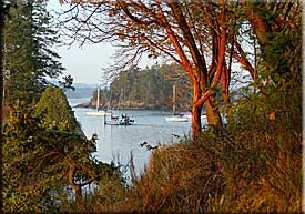 With its cliffs, protected coves and sandy beaches, Portland Island’s 575 hectares can be
explored through the 10 kilometres of walking trails than run all along the circumference
of the island.
Getting to Portland Island: Access is by boat or kayak. The island is located between Salt
Spring Island and Sidney on Vancouver Island.
There is a lot of vegetation and wildlife to see—yellow-flowering cacti, arbutus and Garry
oaks, mink, river otters, bald eagles and many more. The underbrush is sparse due to
grazing from feral sheep (which were removed in 1980) and the island’s indigenous
blacktail deer.
Portland’s history can also be seen in the fruit trees, roses and garden plants and shell
midden beaches throughout the island. The island was the site of a First Nations’ village.
Hawaiian immigrants who settled on the island in the 1880s also farmed there.
With its cliffs, protected coves and sandy beaches, Portland Island’s 575 hectares can be
explored through the 10 kilometres of walking trails than run all along the circumference
of the island.
Getting to Portland Island: Access is by boat or kayak. The island is located between Salt
Spring Island and Sidney on Vancouver Island.
There is a lot of vegetation and wildlife to see—yellow-flowering cacti, arbutus and Garry
oaks, mink, river otters, bald eagles and many more. The underbrush is sparse due to
grazing from feral sheep (which were removed in 1980) and the island’s indigenous
blacktail deer.
Portland’s history can also be seen in the fruit trees, roses and garden plants and shell
midden beaches throughout the island. The island was the site of a First Nations’ village.
Hawaiian immigrants who settled on the island in the 1880s also farmed there.
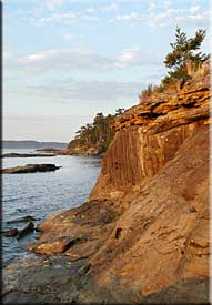 The island was given to Princess Margaret in 1958 to commemorate her visit to BC. The
island was named after her when she returned the island to BC as a park in 1967. Today it
is part of the Gulf Islands National Park Reserve. Amenities:
The island was given to Princess Margaret in 1958 to commemorate her visit to BC. The
island was named after her when she returned the island to BC as a park in 1967. Today it
is part of the Gulf Islands National Park Reserve. Amenities: